 Mon-Fri 07:00am-06:00pm

 Emergency Services are available for an additional fee


How to Safely and Effectively Troubleshoot a Breaker That Keeps Tripping
Why Circuit Breakers Trip and What You Can Do About It
Troubleshoot breaker keeps tripping issues by following this systematic approach: first, safely reset the breaker and observe if it trips immediately. If it holds, unplug all devices and reconnect them one by one to find overloads. If the breaker trips with nothing connected, you likely have a short circuit or ground fault that requires professional inspection.
Quick Troubleshooting Steps:
1. Turn breaker fully OFF, then ON
2. Unplug all devices on that circuit
3. Reset breaker – does it hold power?
4. If yes: Reconnect devices one at a time to find the culprit
5. If no: Stop and call an electrician (likely a wiring fault)
You’re relaxing after a long day when suddenly the lights go out. You head to the electrical panel and find a breaker switch sitting in that telltale middle position between ON and OFF. You flip it back on, but within minutes—or sometimes seconds—it trips again.
This scenario plays out in thousands of Denver homes every day. Circuit breakers trip for good reasons: they’re protecting your home from electrical fires, equipment damage, and potential electrocution. When a breaker keeps tripping repeatedly, it’s your electrical system’s way of saying “something’s wrong here.”
The three main culprits behind persistent breaker trips are circuit overloads (too many devices drawing power), short circuits (wires touching where they shouldn’t), and ground faults (electricity finding unintended paths to earth). Each requires a different troubleshooting approach.
Most homeowners can safely diagnose and fix simple overload issues. However, short circuits and ground faults often involve damaged wiring that needs professional attention. Ignoring a breaker that keeps tripping isn’t just inconvenient—it can lead to house fires or serious electrical injuries.

Why Breakers Trip & How to Diagnose
Your circuit breaker acts as a vigilant guard, constantly monitoring electrical current and cutting power when it detects trouble. When your breaker trips repeatedly, it’s protecting your life and home from electrical fires.
Anatomy of a Circuit Breaker
Most home breakers use a thermal-magnetic trip mechanism. The thermal part gradually heats up when too much current flows for too long. The magnetic part instantly cuts power when it detects massive current surges from short circuits.
Your electrical circuits are simple: Hot wires (black/red) carry electricity from your panel to outlets. Neutral wires (white) provide the return path. Ground wires (green/bare copper) give stray electricity a safe path.
Top 3 Reasons a Breaker Trips
Circuit overloads are the most common issue when you troubleshoot breaker keeps tripping problems. Your 15-amp circuit might handle a few lamps fine, but add a 12-amp space heater and you’ve crossed the line.
Short circuits happen when hot wires touch neutral wires or other hot wires, creating instant current rushes that generate sparks, heat, and potential fires.
Ground faults occur when electricity finds unintended paths to ground, often through water or damaged insulation. These are especially dangerous because that path could be through your body.
Signs You’re Dealing With a Faulty Breaker
Scorch marks around breakers indicate dangerous heat buildup. Buzzing or crackling sounds from your panel should never be ignored. A breaker that won’t reset or feels loose has likely worn out. Hot panels mean heat is escaping where it shouldn’t.
Troubleshoot Breaker Keeps Tripping—Root-Cause Checklist
Before troubleshooting, recognize serious warning signs: burning smells, repeated immediate trips, or hot panels mean stop and call professionals immediately.
Troubleshoot Breaker Keeps Tripping: Hands-On Guide
When you’re ready to troubleshoot breaker keeps tripping issues, safety comes first. Review these essential electrical safety tips before starting.
Step 1: Safe Reset & Observe
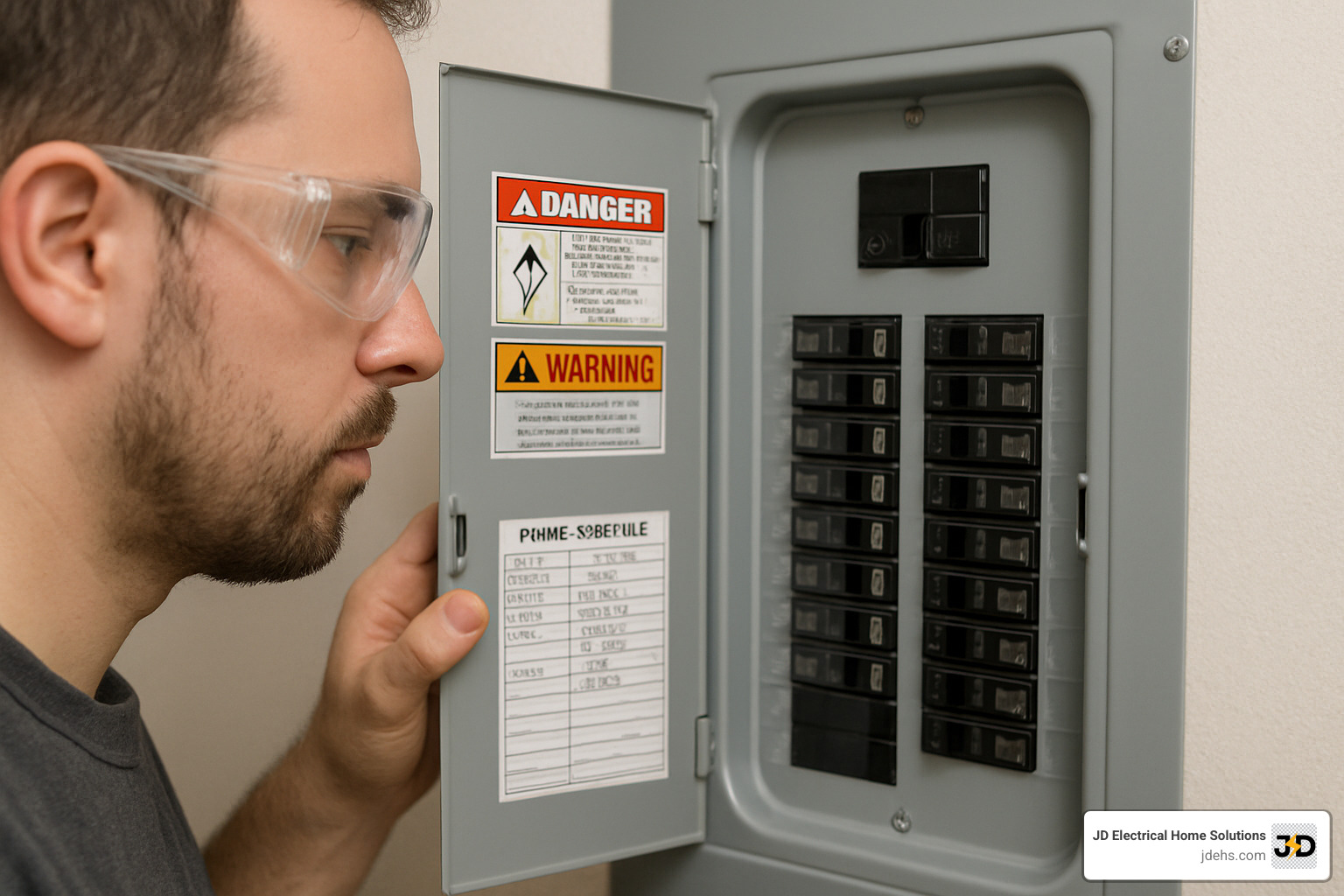
Never stand directly in front of electrical panels when resetting breakers. Stand to the side and turn your face away.
Reset sequence: Push the tripped breaker fully OFF, wait 30 seconds, then flip firmly ON. If the breaker trips immediately without devices plugged in, stop troubleshooting—you have a wiring fault requiring professional help.
Step 2: Unplug & Reload Appliances—Find the Overload
If your breaker stayed on after reset, you’re likely dealing with an overload. Turn off all lights and unplug every device on the affected circuit. Reset the breaker—it should stay on with no load.
Now systematically turn on lights one at a time, then plug in appliances starting with low-wattage items.
Quick math: Divide watts by 120 volts to get amps. That 1,500-watt hairdryer draws 12.5 amps alone. Add lights and other devices, and you’ve maxed out a 15-amp circuit.
Step 3: If It Trips Empty, Inspect for Shorts & Ground Faults
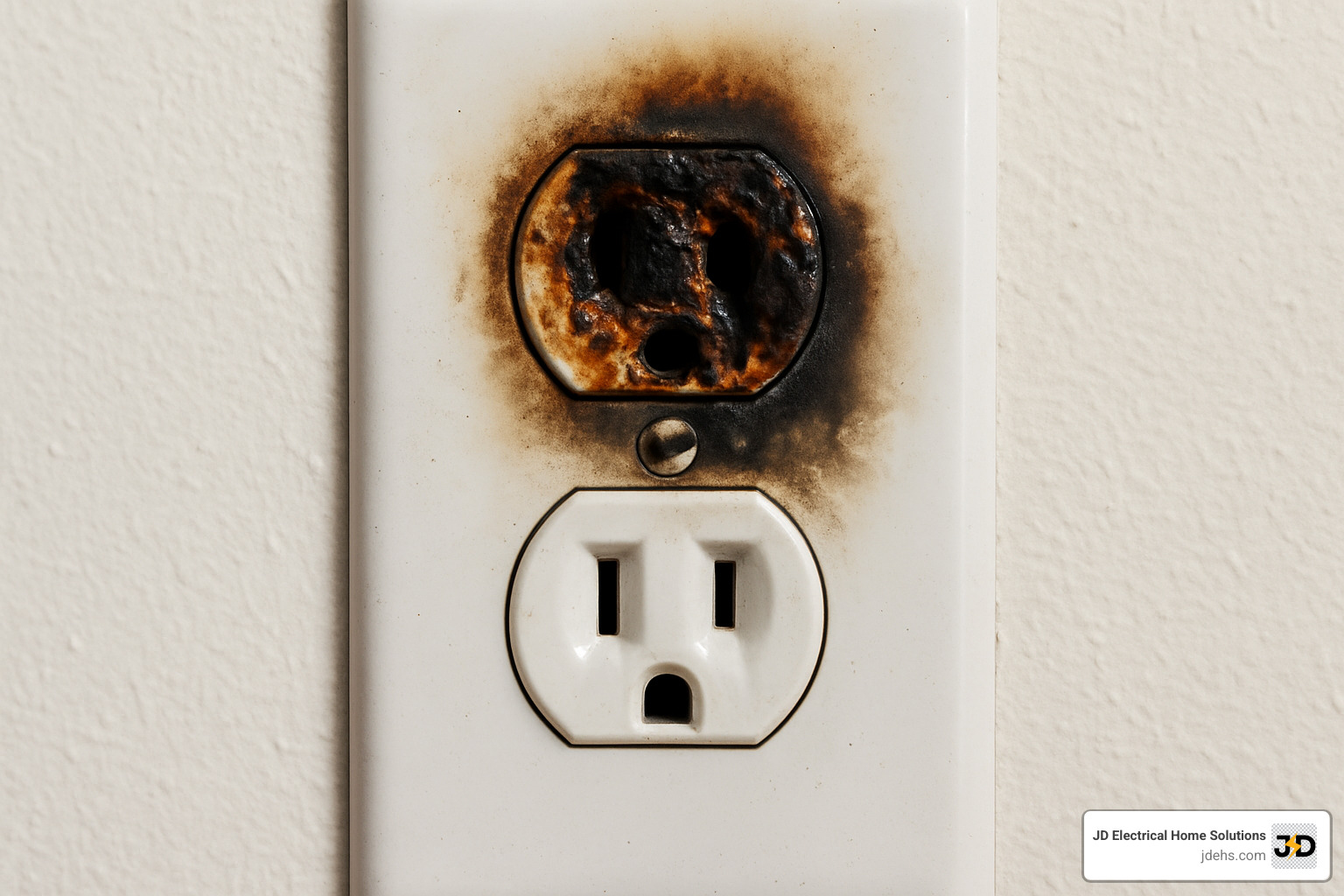
When breakers trip with nothing plugged in, you have wiring problems. Visually inspect all outlets and switches for burn marks, discoloration, or melted plastic smells.
Check for rodent damage in attics and basements—mice love chewing electrical insulation. Ground faults love moisture, so examine bathrooms, kitchens, garages, and outdoor circuits.
Step 4: Know When to Call a Licensed Electrician
Burning smells, repeated immediate trips, sparks, or hot panels require immediate professional attention. Licensed electricians bring proper training, tools, and code compliance expertise.
Prevent the Next Trip—Load Management & Upgrades
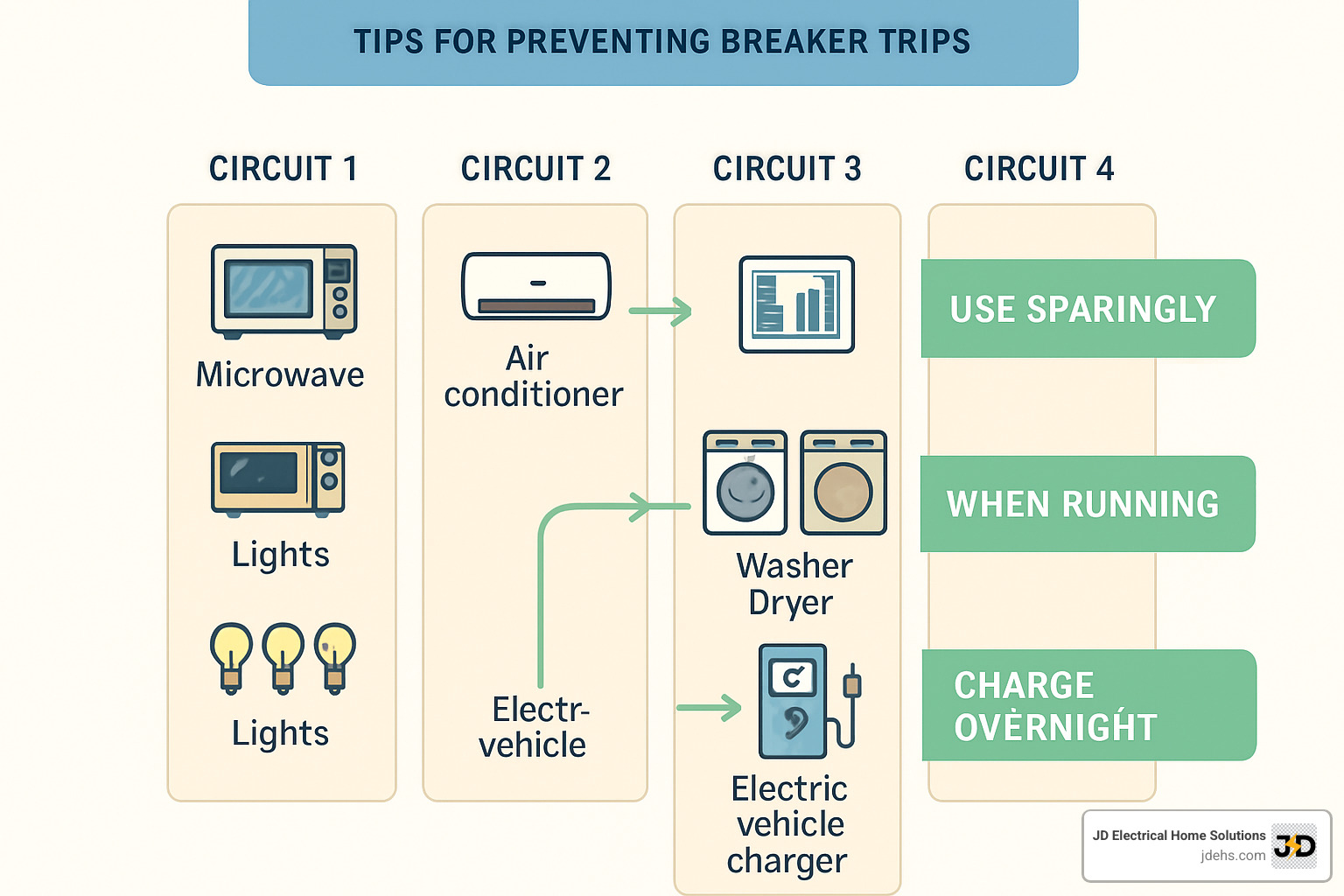
Use high-wattage appliances one at a time whenever possible. For homes struggling with capacity, dedicated circuits for major appliances solve problems permanently.
Circuit capacity guide: 15-amp circuits safely handle 12 amps (1,440 watts). 20-amp circuits support 16 amps (1,920 watts). 30-amp circuits handle 24 amps (2,880 watts).
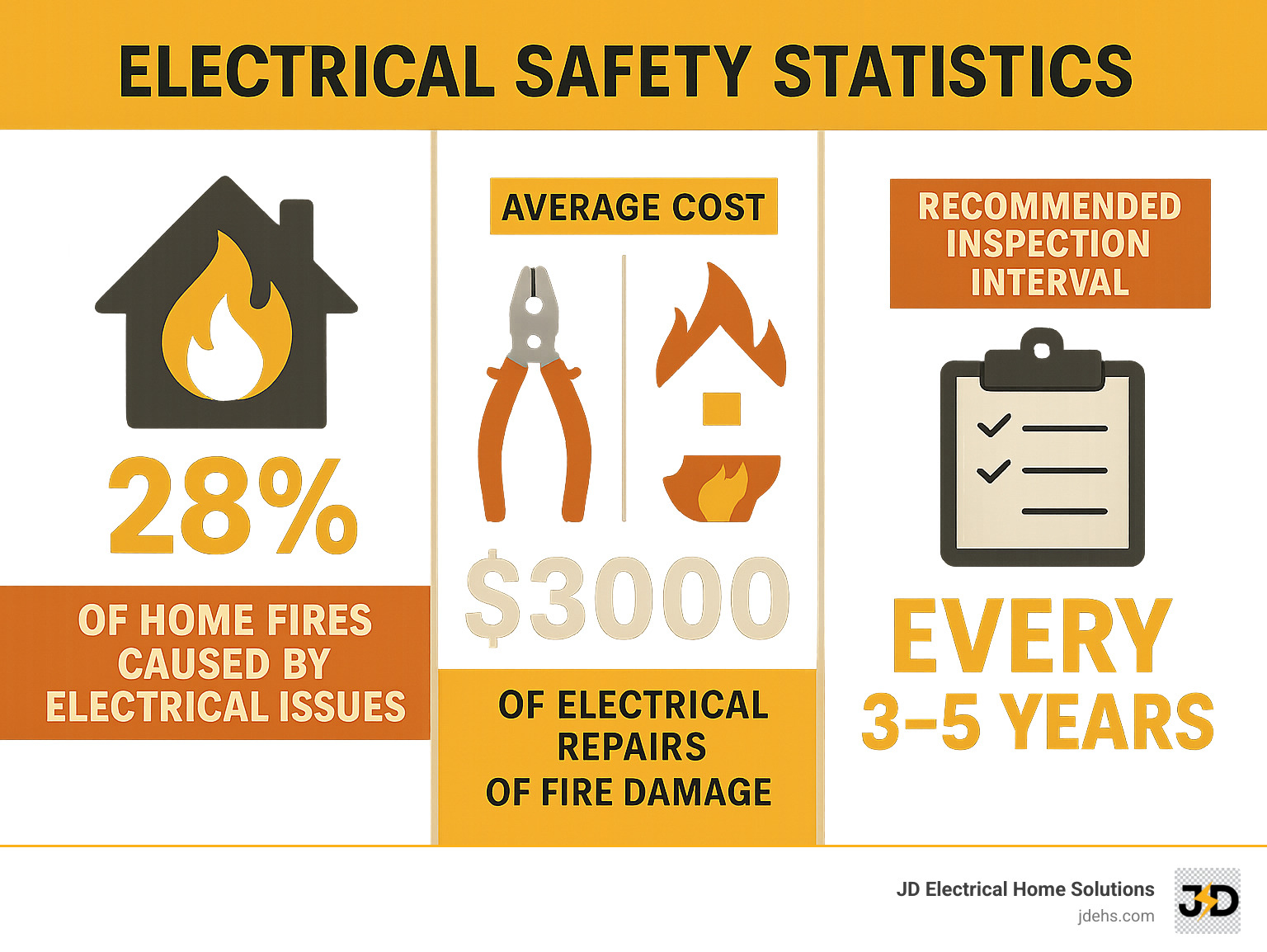
Regular electrical maintenance prevents emergencies—annual visual inspections and professional inspections every 3-5 years keep systems safe.
Conclusion
Troubleshooting a breaker that keeps tripping starts with understanding that your electrical system is trying to protect you. Those annoying trips aren’t just inconveniences—they’re your home’s way of preventing electrical fires and keeping your family safe.
The good news? Many breaker issues stem from simple circuit overloads that you can fix yourself by redistributing appliances or changing when you use high-wattage devices. That morning routine of running the hairdryer, microwave, and coffee maker all at once might need a small adjustment, but it beats dealing with a house fire.
However, when breakers trip repeatedly with nothing plugged in, or when you smell burning odors around your electrical panel, it’s time to step back and call the professionals. These warning signs often point to damaged wiring, deteriorating connections, or other hazards that require specialized training and tools to fix safely.
Your electrical system deserves the same attention you give your plumbing or HVAC. Regular maintenance and prompt attention to problems prevents small issues from becoming expensive emergencies. Those scorch marks around outlets or that slight buzzing from your panel aren’t things to ignore until next month.
For Metro Denver homeowners dealing with persistent electrical problems, JD Electrical Home Solutions brings certified expertise right to your door. Their licensed electricians serve Arvada, Aurora, Boulder, and surrounding communities with the kind of fair, upfront pricing that lets you plan repairs without surprises.
Whether you’re facing a simple overload situation or need a complete electrical panel upgrade to handle modern electrical demands, professional electrical services ensure your home’s safety systems work as designed. When your family’s safety is on the line, trust the experts who understand electrical systems and prioritize getting things done right the first time.
Don’t gamble with electrical issues that could put your home and family at risk. For comprehensive electrical troubleshooting services that get to the root of the problem, contact qualified electricians who can diagnose and resolve even the most complex electrical issues safely and efficiently.


