Mon-Fri 07:00am-06:00pm

 Emergency Services are available for an additional fee


Electric Vehicle Charging Station Power Requirements In Colorado
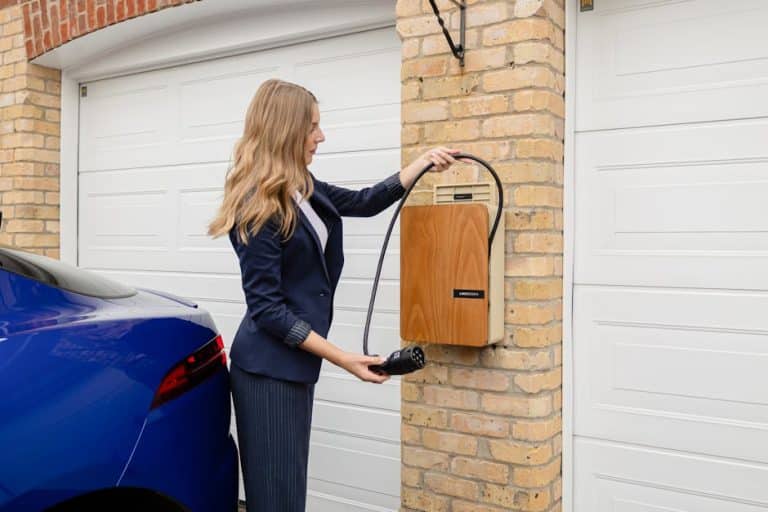
Electric vehicles (EVs) are everywhere on Colorado roads, from ski‑town parking lots to suburban garages along the Front Range. If you’re ready to bring fast, convenient charging home, the first question is simple: does your house have the power to support it? This guide breaks down electric vehicle charging station power requirements in Colorado, explains local codes, and walks you through the steps to a safe, code‑compliant installation.
Why Power Requirements Matter For Colorado Homeowners
Charging speed depends on two things: the amperage of the circuit feeding your charger and the size of your vehicle’s battery pack. Because winter temperatures and higher altitudes affect battery efficiency, many Colorado drivers prefer Level 2 home charging that can add 25–30 miles of range per hour instead of relying on the slower Level 1 trickle charge.
Colorado’s 2020 adoption of the National Electrical Code (NEC) means every new circuit must be sized to 125 percent of the continuous load. Oversizing prevents nuisance breaker trips on cold mornings when battery heaters kick in. Understanding these rules up front saves time and re‑inspection fees.
Understanding Charger Levels and Their Power Needs
Level 1 (120‑volt, 12–16 amps)
Level 1 uses a standard household outlet and adds roughly 4–5 miles of range per hour. It’s fine if you drive 20 miles a day and have all night to recharge. Most Colorado homeowners grow out of Level 1 after the first ski weekend.
Level 2 (240‑volt, 40–60 amps)
Level 2 chargers pull 7.2–11.5 kW and need a dedicated 240‑volt circuit with a 40‑ or 60‑amp breaker, depending on charger rating. At 7.6 kW you’ll recover about 25 miles of range per hour of charge—ideal for commuters and families with multiple activities.
Level 3 / DC Fast (50 kW and up)
DC Fast chargers require three‑phase service and power levels far beyond what a residential utility drop provides. They’re mentioned here only to explain why they’re not practical—or affordable—for single‑family homes.
How To Calculate Your Home’s Available Electrical Capacity
Check Your Panel Rating
Look at the main breaker. Most post‑1990 houses in the Denver metro area are 150 or 200 amps. Older homes in neighborhoods like Wash Park or Englewood may still have 100‑amp service. If your main breaker is 100 amps and already near capacity, a Level 2 circuit could push it over the limit.
Basic Load Calculation
Colorado jurisdictions follow NEC 220.42 demand factors. In plain English: add up the wattage of fixed appliances (range, dryer, HVAC) and multiply by the demand factor to estimate peak load. Compare that number to your main breaker rating. If you’re within 20 percent of the limit, plan for a panel upgrade.
JD Electrical Home Solutions performs this calculation during a free quote so you know exactly where you stand.
Colorado‑Specific Electrical Codes And Incentives
House Bill 23‑1233: Charging And Parking Requirements
HB 23‑1233 requires new multifamily developments to include EV‑ready wiring and prohibits HOAs from unreasonably blocking charger installations (leg.colorado.gov). While the bill focuses on commercial and shared parking, it signals Colorado’s push toward home charging infrastructure.
Utility Rebates And State Credits
Xcel Energy’s EV Supply Infrastructure Program offers up to $500 toward a residential Level 2 charger installation. Combine that with the Colorado EVSE tax credit—currently 10 percent of equipment cost up to $1,500—and the federal 30 percent credit (Form 8911) for significant savings.
Permit Timelines In The Denver Metro Area
Most Front Range cities issue over‑the‑counter electrical permits for a single Level 2 circuit within two business days if plans are complete. Inspections are usually required before the utility will energize the new circuit.
Municipal Requirements Around Greater Denver
Denver – EV‑Ready Spaces
Denver’s Energy Code requires one EV‑ready parking space in all new one‑ and two‑family homes (denvergov.org). The city’s fact sheet specifies a 40‑amp, 240‑volt circuit with a double‑pole breaker labeled “EV Ready.”
Boulder – Energy Conservation Code
Boulder mandates EV‑ready conduit and panel capacity for new construction and major remodels (bouldercolorado.gov). Permit applications must include a load calculation and cost estimate.
Aurora – Adopted Electrical Codes
Aurora follows the 2023 NEC with local amendments and issues EV charger permits through its eTRAKiT portal (auroragov.org).
Erie – Town Sustainability And EV Guidance
The Town of Erie promotes residential EV adoption and provides a dedicated EV information page with local incentives and charging FAQs (erieco.gov).
Links to additional municipal resources:
- Denver EV charging spaces: denvergov.org
- Boulder EV charging requirements: bouldercolorado.gov
- Aurora permit portal: auroragov.org eTRAKiT
- Erie EV information: erieco.gov/2477/Electric‑Vehicles
Upgrading Your Electrical Panel For A Level 2 Charger
Cost Range In Colorado
Panel upgrades in metro Denver typically run $2,500–$5,000, including permits and inspection. Homes with exterior panels or limited service drop clearance may see higher costs. Budget another $300–$500 if your utility requires a meter socket upgrade.
What The Upgrade Involves
- Utility disconnect and meter pull
- Removal of the old panel and installation of a 200‑amp panelboard rated for copper or aluminum feeders
- New grounding electrode system and bonding jumpers per NEC 250
- Labeling and balancing of branch circuits
- Inspection and reconnection
JD Electrical Home Solutions handles the entire process, from utility coordination to final walkthrough.
Choosing The Right Charger And Installer
Charger Selection Factors
- Battery size: Larger batteries benefit from 48‑amp units
- Future needs: Plan for a second EV
- Smart features: Wi‑Fi scheduling, load sharing
- NEMA 14‑50 plug‑in vs. hard‑wired
Why Hire A Licensed EV Charger Electrician In Denver
A qualified electrician ensures:
- Proper conductor sizing and GFCI protection (NEC 625.22)
- Compliance with municipal permitting
- Warranty protection for charger and vehicle
Step‑By‑Step Installation Timeline
- Site Visit & Load Calculation – 30 minutes
- Permit Submission – 1–2 days
- Panel Upgrade (if needed) – 1 day
- Charger Circuit Installation – 3–4 hours
- Inspection & Utility Release – 24–48 hours
Total timeline: 3–7 business days for most projects.
Frequently Asked Questions
How much does a Level 2 home charger add to my electricity bill? A full charge on a 70 kWh battery costs about $7 at Colorado’s average residential rate of 10 c/kWh.
Can I install a charger in an attached garage? Yes. Most municipalities allow interior installations if conduit is metal or Schedule 80 PVC and outlets are at least 18 inches above the floor.
Do I need a dedicated meter? Only if you’re applying for a time‑of‑use EV rate through Xcel Energy. Otherwise a dedicated breaker is sufficient.
Ready To Charge? Call JD Electrical Home Solutions
Understanding electric vehicle charging station power requirements in Colorado is the first step toward convenient, affordable home charging. For a detailed load calculation and a code‑compliant installation, call JD Electrical Home Solutions today. Speak with a professional electrician and schedule your free consultation.