 Mon-Fri 07:00am-06:00pm

 Emergency Services are available for an additional fee


Discover the Best Level 2 EV Charger for Fast, Efficient Charging
Finding the Right Level 2 EV Charger for Your Home
Looking for the best level 2 EV charger for your home? Here’s a quick overview of the top options in 2024:
| Rank | Model | Price | Key Features | Best For |
|---|---|---|---|---|
| 1 | Emporia 48-amp | $399 | 48A output, load management, 99/100 rating | Overall value & performance |
| 2 | ChargePoint Home Flex | $599 | Adjustable 16-50A, cold-weather cable, app integration | Smart home integration |
| 3 | Tesla Universal Wall Connector | $620 | 48A output, works with all EVs, integrated J1772 adapter | Tesla owners & universal use |
| 4 | Wallbox Pulsar Plus 48 | $699 | Power sharing, app control, compact design | Multi-car households |
| 5 | Grizzl-E Smart | $350 | Weather-resistant (IP67), simple design, durable | Budget & outdoor use |
Switching from a standard wall outlet to a dedicated Level 2 EV charger is one of the most important upgrades you can make as an electric vehicle owner. While the Level 1 charger that came with your car works in a pinch, it delivers just 4-5 miles of range per hour – barely enough for a typical daily commute in Denver.
Level 2 EV chargers transform your charging experience by delivering up to 9 times faster charging speeds, providing approximately 25 miles of range per hour. This means your vehicle can fully charge overnight, even from a nearly depleted battery.
The difference is dramatic: plug in at 8 PM with a Level 2 charger, and your car is ready with a full battery by morning. The same scenario with a Level 1 charger might leave you with just 40-50 miles of range – potentially creating range anxiety for Denver drivers with longer commutes.
With about 50% of US homes requiring an electrical panel upgrade to safely install a Level 2 charger, choosing the right model and proper installation are critical decisions. The best chargers offer smart features like scheduling for off-peak electricity rates, weather resistance for garage or outdoor installation, and compatibility with all EV models.
Whether you’re a new EV owner or looking to upgrade from a slower charging solution, this guide will help you understand what makes the best level 2 EV charger for your specific needs and how to ensure safe, efficient installation.

Why This Guide Matters
Electric vehicle ownership comes with many benefits, but range anxiety remains a common concern for new and prospective owners. Having reliable, fast charging at home eliminates this worry by ensuring your vehicle is ready whenever you need it.
Beyond convenience, a Level 2 charger offers significant cost savings. Home charging is substantially cheaper than public charging stations, and smart chargers allow you to take advantage of off-peak utility rates. For Denver residents, this can mean charging your vehicle for a fraction of what you’d pay at commercial stations.
As one Denver EV owner shared: “After installing my Level 2 charger, I stopped worrying about finding public charging stations. I plug in when I get home, and my car is always ready in the morning—even in Colorado’s coldest winter days.”
How Level 2 Charging Works & Why You Need It
Ever wondered why your EV seems to charge at a snail’s pace? The secret to faster home charging lies in the voltage. Level 2 EV chargers tap into 240-volt circuits—the same robust electrical lines that power your dryer and oven—instead of the standard 120-volt household outlets used by those basic Level 1 chargers that came with your car.
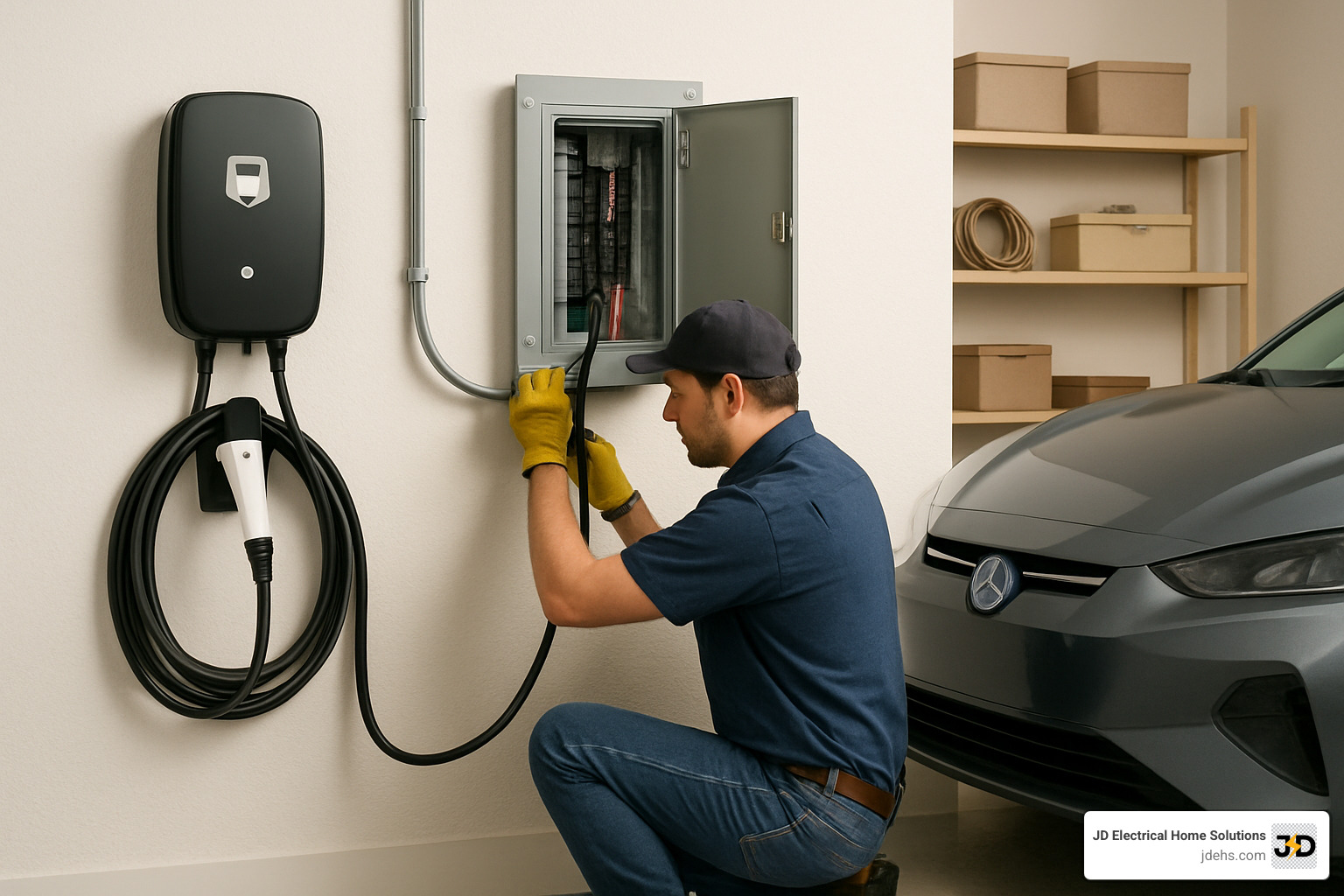
The difference in charging speed is dramatic:
- A Level 1 charger crawls along at just 4-5 miles of range per hour
- A best level 2 EV charger zooms ahead with 25-37 miles of range each hour (depending on the amperage)
- DC Fast Charging (Level 3) sprints to 100-200+ miles in just 30 minutes
While those DC Fast Chargers might sound tempting, they’re designed primarily for commercial use and highway pit stops. Plus, using them daily isn’t ideal for your battery’s health. According to scientific research on fast-charging published by Car and Driver, the extreme heat generated during rapid charging can gradually degrade your battery cells over time.
Level 2 charging hits the sweet spot between convenience and battery care. The moderate charging rate is gentle on your battery while still being fast enough for practical daily use.
As Mark, a Denver Tesla owner, told us: “I tried getting by with just the Level 1 charger that came with my car, but I was constantly playing catch-up with my commute. After installing a Level 2 charger, it’s like night and day—I plug in when I get home and never think about range anymore, even during Colorado’s coldest days.”
Key Factors Before You Buy
Before you click “buy” on that shiny new best level 2 EV charger, let’s talk about what really matters for your specific situation.
Amperage makes all the difference in charging speed. Most home chargers deliver between 32 and 48 amps. Higher amperage means faster charging, but requires a beefier electrical circuit—a 32-amp charger needs a 40-amp circuit, while a 48-amp powerhouse requires a 60-amp circuit.
Connector compatibility is crucial but straightforward. The J1772 connector works with all North American EVs (Tesla owners, your adapter came with your car). Some newer chargers now offer Tesla’s NACS connector directly or as an option.
Smart features can transform your charging experience. Modern chargers with WiFi connectivity let you schedule charging during cheaper off-peak hours, track your energy usage, receive notifications, and even control everything from your phone while you’re cozied up on the couch.
Weather resistance matters more than you might think, especially in Denver’s variable climate. If your charger will live outdoors, look for appropriate NEMA or IP ratings. The Grizzl-E Classic, for example, features an IP67 rating making it tough enough to handle everything from -30°F blizzards to 110°F summer days.
Cable length seems minor until you’re stretching across your garage. Standard cables run 18-25 feet. Think about your parking arrangement and how far your vehicle’s charging port will be from the installation spot.
Load management features can be a game-changer for homes with limited electrical capacity. Advanced chargers like the Emporia can monitor your home’s electrical usage and dial back charging rates when other appliances are running—potentially saving you from a costly electrical panel upgrade.
Future-proofing your setup makes sense if you’re thinking about adding a second EV down the road. Some chargers offer power-sharing capabilities that let multiple units intelligently distribute available power.
Many Denver homes, especially older ones, may need electrical panel upgrades to support a Level 2 charger. Learn more about Electrical Panel Upgrades to see if your home needs this preparation.
Installation Essentials & Safety
Installing a Level 2 charger isn’t a typical DIY project—proper installation ensures both safety and optimal performance.
Your panel capacity is the first checkpoint. Your home’s electrical panel must have enough available capacity for this substantial new addition. Most Level 2 chargers require either a 40-amp breaker (for 32-amp chargers) or a 60-amp breaker (for 48-amp chargers). This sizing follows the National Electrical Code requirement that circuits be sized at 125% of the continuous load.
GFCI protection is required by code for most EV charging circuits. Many modern EV chargers have built-in GFCI protection, which can sometimes conflict with GFCI breakers. A licensed electrician will know exactly how to steer these requirements for a safe, code-compliant installation.
When it comes to hardwired versus plug-in installation, you have two paths:
Hardwired installations connect directly to your electrical panel. They handle higher amperage, eliminate potential points of failure, and are typically required for outdoor installations. The downside? They’re not portable and require more complex installation.
Plug-in chargers connect to a NEMA 14-50 or NEMA 6-50 outlet. They’re easier to install and can move with you if needed, but most are limited to 40 amps maximum and add an additional potential point of failure.
As Mike, one of our master electricians at JD Electrical Home Solutions, often tells customers: “For permanent installations, hardwiring is almost always better. It’s more reliable for the long haul and eliminates the risk of outlet failure when you’re pulling continuous high current day after day.”
Want to understand the entire installation process from start to finish? Check out our comprehensive guide on Home Car Charger Installation for everything you need to know.
2024 Buyer’s Guide: Best Level 2 EV Charger Roundup
After testing dozens of models and collecting feedback from real Denver EV owners, we’ve identified the top Level 2 chargers that stand out in today’s market. Whether you’re a data-loving tech enthusiast or need something that can brave Colorado’s unpredictable weather, there’s a perfect charger for your needs.

Smart WiFi-Enabled Picks for Data Lovers
For those who love tracking their energy usage and optimizing charging schedules, these connected chargers deliver impressive intelligence alongside reliable performance.
The ChargePoint Home Flex ($599) has earned its reputation as a smart-charging powerhouse. What makes it special isn’t just the adjustable amperage (16-50 amps) but how seamlessly it integrates with both home and public charging networks. Denver drivers particularly appreciate its cold-weather cable that remains flexible even during our frigid winter mornings.
“I’ve programmed my ChargePoint to only charge after 1:00 AM when our utility rates drop,” shares a Highlands Ranch Tesla owner. “The app makes it simple, and I’ve saved hundreds on electricity by charging during off-peak hours.”
The Emporia 48-amp ($399) is perhaps the biggest surprise in recent testing, earning an almost perfect 99/100 score from independent testers at ChargerRater. What makes this charger truly stand out is its PowerSmart load management system. This clever feature monitors your home’s electricity usage and adjusts charging speeds to prevent overloading your electrical panel.
As one JD Electrical Home Solutions technician explained, “About half the homes I visit in Denver would normally require expensive panel upgrades for Level 2 charging. The Emporia’s load management can often eliminate that need by dialing back charging when other appliances are running.”
For homes with multiple EVs (or plans to add a second), the Wallbox Pulsar Plus 48 ($699) offers sophisticated power-sharing capabilities in a surprisingly compact package. About the size of a doorbell chime box, this sleek unit can communicate with other Wallbox chargers to distribute available power intelligently. It also works with both Alexa and Google Assistant for voice control convenience.
For deeper technical reviews and side-by-side comparisons, many of our customers follow the State of Charge YouTube channel, which offers detailed testing of the latest models.
Outdoor-Ready & Extreme-Weather Options
Colorado’s climate demands exceptionally durable equipment. From summer thunderstorms to winter blizzards, these rugged chargers can handle whatever Mother Nature throws at them.
The aptly named Grizzl-E Classic ($395) lives up to its bear-inspired branding with tank-like construction. Its impressive IP67 rating means it’s completely protected against dust and can even survive temporary water immersion. When temperatures plunge to -30°F, the Grizzl-E keeps working when other chargers give up.
“After my first charger failed during a snowstorm, I switched to the Grizzl-E,” a Boulder resident told us. “It’s been absolutely bulletproof through snow, ice, and summer heat for over two years now.”
The EVIQO EVPOWER 48 ($399) strikes a nice balance between weather resistance and smart capabilities without breaking the bank. Its IP65 rated enclosure and heavy-duty rubberized connector stand up to Colorado’s elements, while its app allows for convenient scheduling and monitoring.
For homes where security is a concern, the Autel MaxiCharger Lite 50 ($569) includes thoughtful features like RFID authentication to prevent unauthorized use and a lockable holster to secure the connector when not in use. These extras provide peace of mind for outdoor installations in accessible areas.
One JD Electrical Home Solutions specialist emphasized, “Proper installation is just as important as choosing a weather-resistant charger. Make sure your electrician understands appropriate sealing techniques and weather-resistant conduit—especially important in Colorado where we experience such dramatic temperature swings.”
High-Amperage & Future-Proof Chargers (Best Level 2 EV Charger for 11.5 kW+)
As EV batteries grow larger, higher-powered chargers can significantly reduce charging times. These models deliver the fastest home charging speeds currently available.
The Tesla Universal Wall Connector ($620) has evolved beyond serving just Tesla vehicles. Its ingenious “Magic Dock” with an integrated J1772 adapter now works with all EVs while maintaining Tesla’s legendary attention to design detail. At 48 amps (11.5 kW), it charges at the maximum rate most home electrical systems can support.
Beyond its impressive 48-amp output, the Emporia 48-amp with PowerSmart ($399) stands out for its forward-thinking features. It can integrate with home solar systems and includes provisions for future bi-directional capabilities (allowing your car to power your home during outages). At its price point, it offers exceptional value for high-power charging.
When hardwired, the ChargePoint Home Flex ($599) can deliver up to 50 amps of power—pushing the boundaries of Level 2 charging speeds. What’s particularly nice is how easily you can adjust the output to match your specific circuit capacity, ensuring safe operation without requiring an electrician for reconfiguration.
Plug-In vs Hardwired: Which Is Right For You?
Your installation method affects both performance and flexibility. Here’s what to consider when deciding between plug-in and hardwired options:
| Feature | Plug-In (NEMA 14-50/6-50) | Hardwired |
|---|---|---|
| Maximum amperage | Typically limited to 40A | Up to 48-50A |
| Installation cost | Often less expensive | Slightly higher |
| Portability | Can be relocated | Permanent installation |
| Safety for continuous load | Additional point of failure | More reliable long-term |
| Outdoor installation | Not recommended | Better for weather exposure |
| Code compliance | May require special outlets | Typically easier to meet code |
“After installing hundreds of EV chargers throughout Denver, I almost always recommend hardwiring,” shares a senior electrician from JD Electrical Home Solutions. “The slight additional cost upfront prevents headaches down the road, especially for chargers used daily.”
For plug-in installations, you’ll typically choose between a NEMA 14-50 outlet (the same used for electric ranges) or a NEMA 6-50 outlet (commonly used for welders). While plug-in options offer more flexibility if you might move, hardwired installations eliminate a potential point of failure and handle higher continuous loads more safely. They’re also typically required for outdoor installations to ensure proper weatherproofing.
Costs, Incentives & Rebates You Shouldn’t Miss
The investment in a best level 2 EV charger includes both equipment and installation costs, but several incentives can substantially reduce your out-of-pocket expenses.
Equipment costs typically range from $350-$500 for basic Level 2 chargers, while smart models with advanced features run $500-$800. Installation costs vary more widely: a basic installation with existing capacity might cost $500-$800, while installations requiring new circuits run $800-$1,200. If your home needs a panel upgrade, expect to invest $1,500-$2,500+.
Fortunately, the Inflation Reduction Act provides a federal tax credit covering 30% of your home EV charger equipment and installation costs (up to $1,000) through 2032. This alone can save hundreds on your total investment.
Colorado utilities offer particularly generous rebates. Xcel Energy provides up to $500 for qualifying networked chargers, while Colorado Springs Utilities, Fort Collins Utilities, and Longmont Power & Communications all offer rebates ranging from $300-$500.
“Always check with your utility before purchasing,” recommends our team at JD Electrical Home Solutions. “Some rebates require pre-approval or installation by certified contractors, and the qualifying charger list changes regularly.”
Denver residents looking to maximize their savings should check our guide to Electric Vehicle Chargers in Denver, CO for the most current local incentives.

Conclusion & Next Steps
Bringing the best level 2 EV charger into your home truly transforms your electric vehicle experience. Instead of the frustration of slow overnight charging or constantly hunting for public stations, you’ll enjoy the freedom of fast, efficient charging right where you park.
When you’re ready to make this upgrade, remember to consider what matters most for your specific situation:
Your home’s electrical capacity plays a crucial role – not every panel can handle a high-amperage charger without modifications. Think about both your current vehicle and any future EVs you might add to your family. Those smart features that seemed like bells and whistles? They might save you hundreds in charging costs by automatically scheduling charging during off-peak hours.
For many Denver-area homeowners, weather resistance is non-negotiable. Our Colorado climate demands equipment that can handle everything from summer heat to winter snow. And don’t leave money on the table – the available rebates and incentives can significantly reduce your installation costs.
Most importantly, this isn’t a DIY project. Proper installation by licensed professionals ensures your system is safe, efficient, and code-compliant. At JD Electrical Home Solutions, we’ve installed hundreds of EV chargers throughout Metro Denver – from Aurora to Boulder, Castle Rock to Golden, and everywhere in between.
Our team brings more than just technical expertise to your project. We provide clear, upfront estimates without surprise costs. We’ll help you steer charger selection based on your specific needs and vehicle. Our electricians understand local building codes and handle all permit requirements. And once installation is complete, we can even help with those sometimes-confusing utility rebate applications.
As more Colorado drivers make the switch to electric, quality home charging becomes not just a convenience but a necessity. Your properly installed Level 2 charger protects your vehicle’s battery health, maximizes your investment, and simply makes EV ownership more enjoyable.
Ready to transform your EV charging experience? The team at JD Electrical Home Solutions is here to help. Contact us today to schedule your consultation and learn more about Electric Vehicle Charger installation options custom to your home.


